July 2026
July in El Toyo: the guide to water adventures in the Cabo de Gata marine reserve
Kayaking, snorkelling, diving and catamaran trips around Cabo de Gata: the July guide to experiencing the sea from El Toyo, with booking tips and the best coves for each activity.
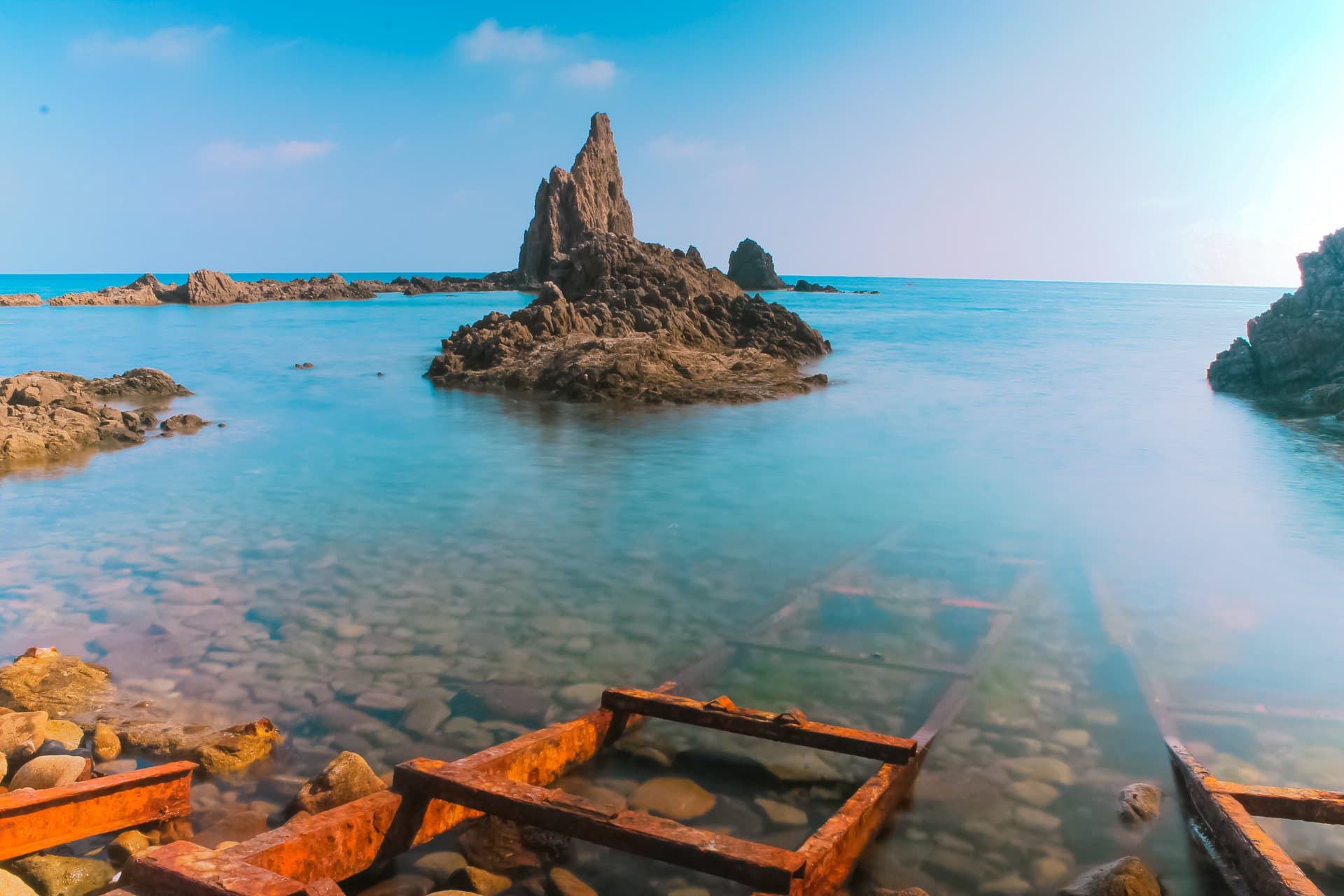
Photo: Noelia Campillo / Wikimedia Commons (CC BY-SA 3.0 ES)
July is, for many sea lovers, the best month to discover why Cabo de Gata-Níjar is the most important marine reserve in the western Mediterranean. The water has already reached its ideal temperature, around 24-25 degrees, and underwater visibility is usually excellent, making the area a go-to destination for snorkelling and diving just twenty minutes from El Toyo.
It's worth bearing in mind that much of the coastline is protected as a marine reserve, with some fully protected zones where swimming, anchoring or diving is not allowed without authorisation. This isn't a limitation — it's the reason the seabed has stayed so well preserved. The recommendation is always to book activities with authorised operators and guides from the area, who know exactly which stretches are open at any given time.
For snorkelling, San Pedro cove, with the ruins of its old castle overlooking the sea, and Cala del Plomo are two favourites for their calm, clear water. The Arrecife de las Sirenas, near Las Negras, adds an extra highlight: volcanic rock formations jutting into the sea that look spectacular from the water.
The dive centres in San José and Las Negras run guided outings and beginner courses for anyone who has never dived with a tank, as well as more demanding routes over wrecks and rock walls for experienced divers. July tends to be one of the busiest months, so booking a few days ahead avoids missing out.
Kayaking is probably the most accessible way to explore the coast: you can rent one independently in San José or join a guided trip covering stretches like the Arco de las Sirenas or the cliffs of Los Escullos. The local tip is to head out early in the morning, when the sea is calm, since the afternoon often brings the levante wind that is common in Cabo de Gata during summer.
Those who prefer something more relaxed can opt for a sunset catamaran route, sailing along the cliffs as the golden evening light falls on the water — a great option for groups or families with young children who aren't yet confident swimmers.
For families, the same San Pedro and Cala del Plomo coves, with shallow water and barely any waves, are also the best places for children to try snorkelling for the first time with a mask, snorkel and fins, always under adult supervision.
A couple of simple habits help keep the marine reserve in the same condition for future visits: using reef-safe sunscreen (without oxybenzone or octinoxate) and avoiding stepping on or touching posidonia, the underwater seagrass that keeps the water so clear and takes decades to regrow.
After a full day of activities in the water, coming back to El Toyo has its own reward: a shower, a calmer dip in the community pool, and dinner on the terrace recounting everything seen underwater that same morning.