February 2026
Flamingos and migratory birds: the surprising wildlife of the Cabo de Gata Salt Flats
The Cabo de Gata Salt Flats are one of the best places in Europe to observe flamingos and migratory birds in winter. Find out when and how to visit them.
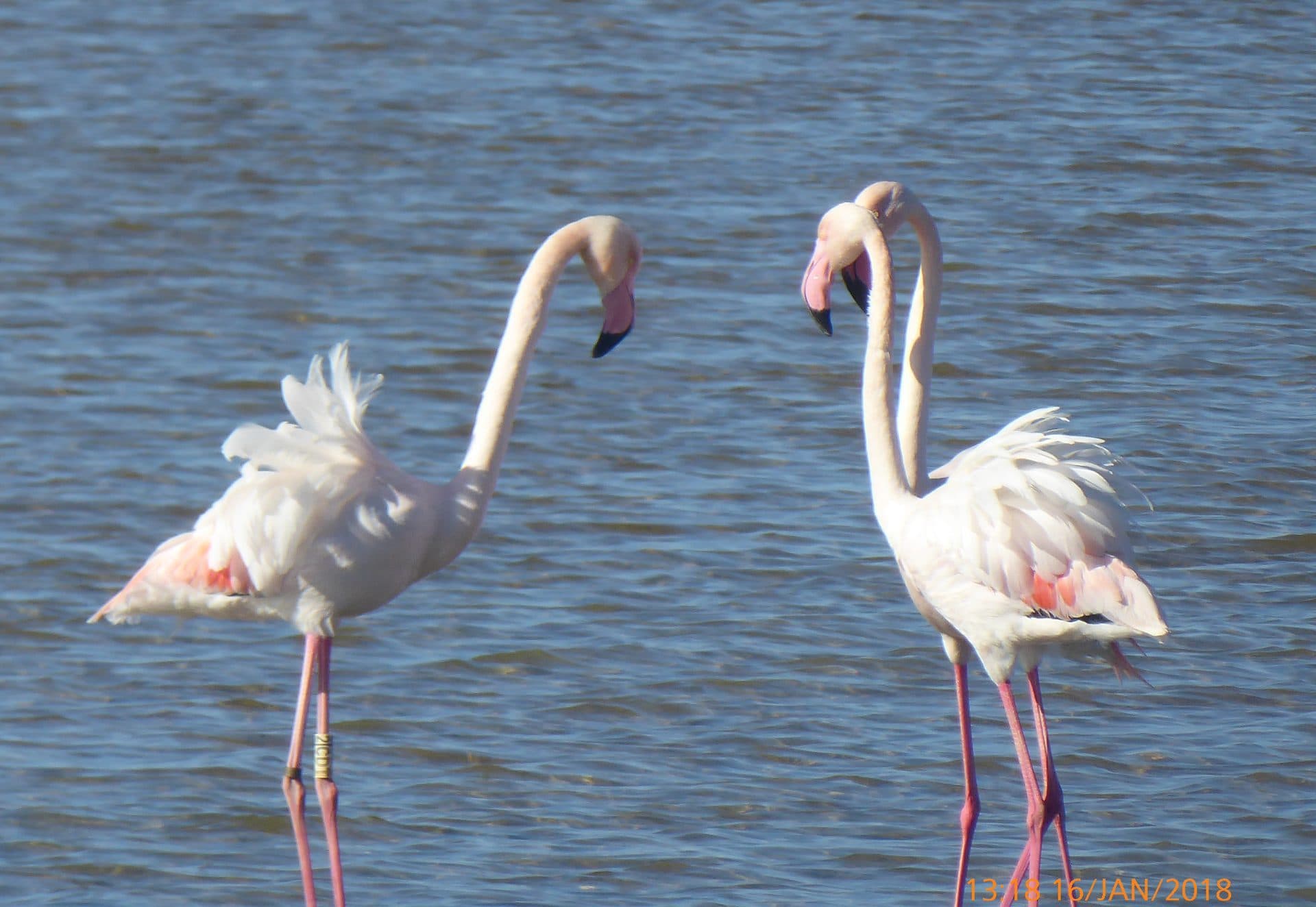
Photo: Iris Korn / Wikimedia Commons (CC BY-SA 3.0)
Few visitors who come to the area for its beach and climate expect to find, just a few minutes from El Toyo, one of the most important wetlands in the western Mediterranean for bird watching. The Cabo de Gata Salt Flats, active since Roman times for salt extraction, have become over time a natural refuge declared a special protection area for birds.
February is, along with the winter months, one of the most spectacular times to visit them, since it is when the largest number of pink flamingos are concentrated, which use the salt flats as a feeding and wintering area. Seeing them silhouetted against the shallow water, with the soft light of the Almeria winter, is one of the most photogenic experiences that the province can offer.
In addition to flamingos, the salt flats receive dozens of migratory species throughout the year, including the avocet, the snowy plover, the stilt and different types of herons, which has made this space a mandatory stop for many ornithology enthusiasts from all over Europe. The landscape is completed by the old salt mines, which still partially operate and offer a unique picture of mountains of white salt next to the sea.
Walking around the salt flats is easy: there is a lane that borders a good part of the space and can be done on foot or by bicycle, with several points set up for observation without disturbing the birds. It is recommended to bring binoculars, discreetly colored clothing and always maintain the appropriate distance from wildlife.
The visit can be perfectly combined with an excursion to the nearby Cabo de Gata Lighthouse or with a hiking route along the Las Sirenas cliffs, so that in a single day it is possible to enjoy both the wildlife of the wetland and the most iconic volcanic landscapes of the natural park.
For those looking for a different vacation, away from beach and crowded tourism, February in Cabo de Gata offers an experience of authentic, silent nature and surprisingly rich in biodiversity, just a step away from the comfort of accommodation in El Toyo.
To observe the flamingos and the rest of the migratory birds with the best guarantees, it is recommended to go first thing in the morning, when the feeding activity is greatest and the low light of dawn offers the perfect conditions for photography. The sunsets, although less active in terms of fauna, nevertheless provide one of the most beautiful pictures in the entire province, with the pink tones of the sky reflected in the water of the salt flats.
The Cabo de Gata Salt Flats also have information panels along the route that explain both the traditional salt extraction process, still in force in part of the facilities, and the main species that can be observed depending on the time of year, a very useful resource for those who visit the area without previous experience in ornithology.
To complete the day, many visitors take advantage of the proximity of the Torre Vigía de las Salinas, an old coastal defense watchtower, and the town of Cabo de Gata itself, with its low fishermen's houses and its authentic atmosphere, ideal for a quiet meal with sea views before returning to El Toyo.